“There is a town in north Ontario / With dream comfort memory to spare,” sings Neil Young. There is a forest in northern Montana where time is stopped. In that forest, time slows from the speed of light to the speed of sound. (Cue Nanci Griffith and John Prine singing “Speed of the Sound of Loneliness.”) So ancient is this one inland rainforest — the Black Ram forest in the Yaak Valley, right on the Canadian border — that the light that filters down through the complex canopy behaves not so much like light as sound: as if you can see it, music made visible, yet somehow inaudible. Awaiting, one must wonder, what release, to hear that light?
Except it is not inaudible. The US Forest Service has proposed nearly a thousand acres of clearcutting for these centuries-old giants: cedar, hemlock, spruce and subalpine fir. To teach the old forest resilience, they said, and to reduce fire in the world. No towns within many miles in any direction.
It’s the first place where water comes into Montana, as far as I can tell. Seat of not-yet-known science, source of mystery — of poems not yet written and songs not yet sung — the old forest, national forest, owned by you and me.
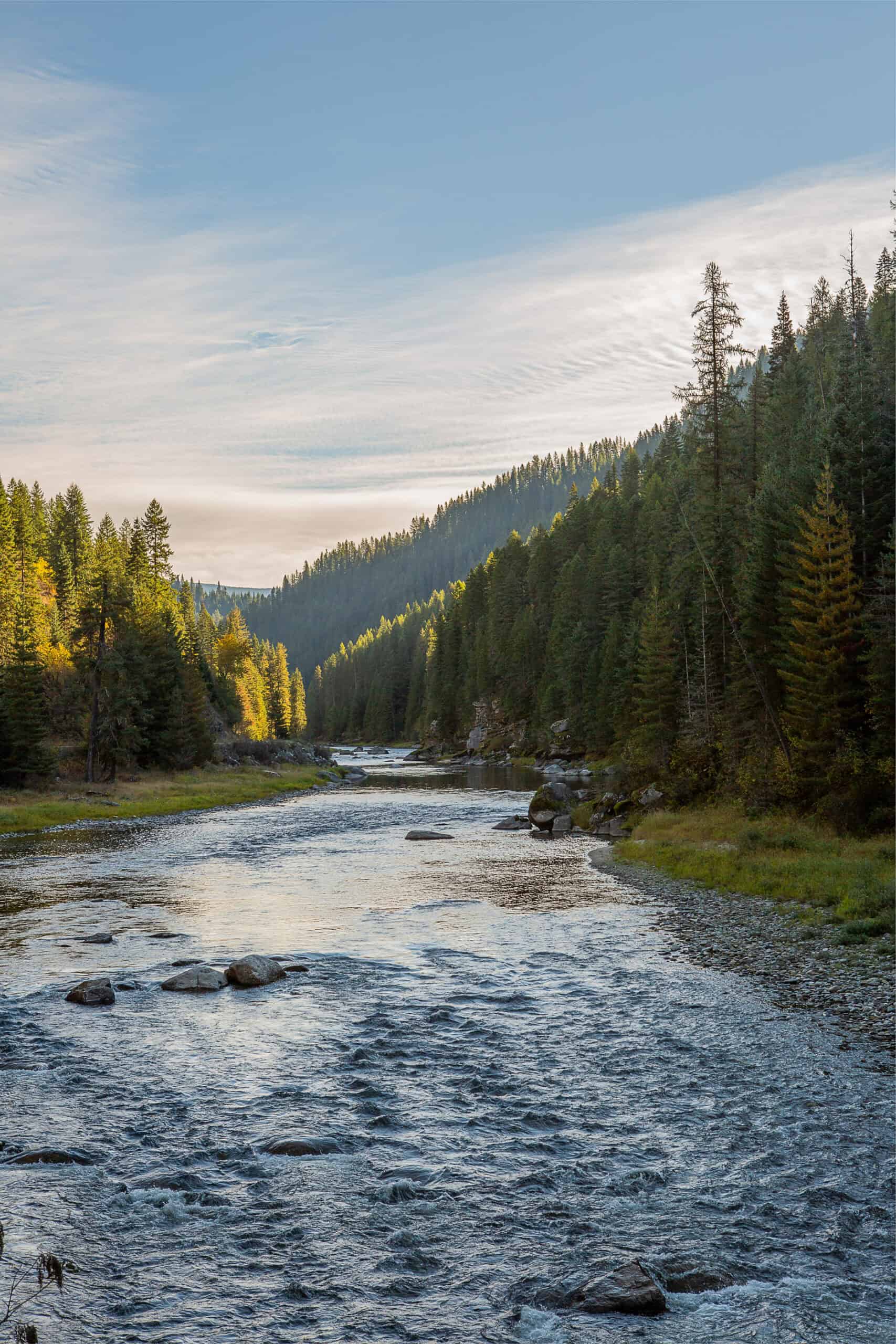
The old forest is wet and has been patient through the centuries, with no sign of significant fires. It lives in a swamp; it guards the water. The nearest building is more than a dozen miles to the south. Wandering the old forest, I pass through shafts and splays of audible light, chords and progressions that shift with the wind, accompanied by the percussion of enormous pileated woodpeckers hammering the hollow pipes of standing snags. What else metamorphoses in the old forest? A newer, more complex understanding of forests and forestry is there, if only we will hear it. In the old forest at Black Ram, species that we’ve been told are enemies of each other have found a way to coexist, growing ancient together, shoulder to shoulder: not just surviving, but prospering. Cedar and larch, hemlock and pine.
Perhaps we oversimplify, overdramatize, the tooth-and claw thing, the survival of the fittest. It is not impossible that this ceaseless ferocity, this fury we project onto all aspects of the natural world, is actually most pronounced within the globe of our own skulls, our own trembling bones.
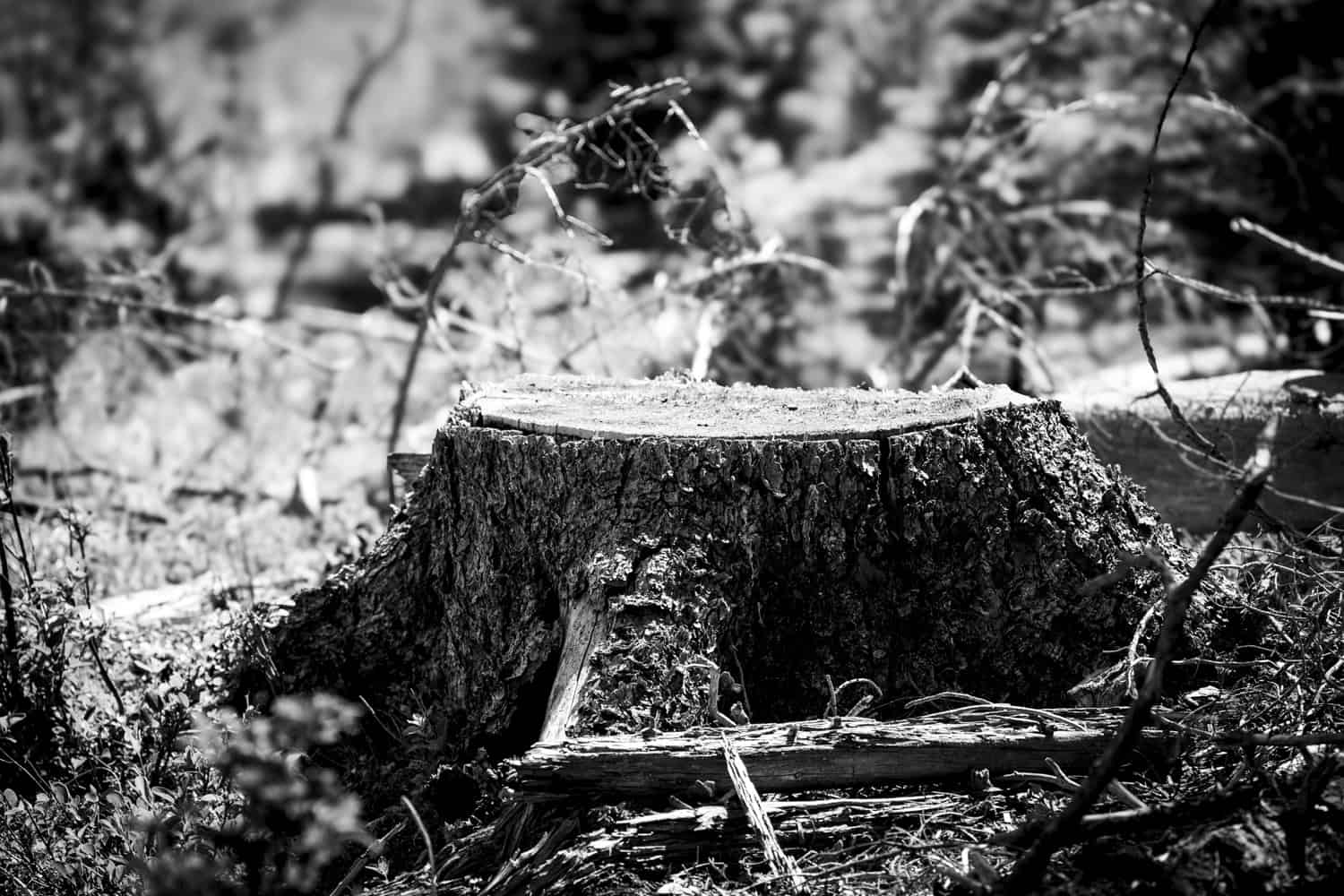
Little wonder then that the USFS wants to cut down these ancient trees that threaten the status quo. To drain the swamp that is the nursery for long-toed salamanders and boreal toads, and plant a pine plantation far from the human eye, where once there was a forest more complex than the potential of the human mind, striving.
How old? A thousand years? Older? Giant larch, estimated to be 600 to 800 years old, stand lovely sentinel — remnant signatures from the last time the earth turned warm — surrounded now by the lovely cool “frost pocket” of the Yaak’s spruce and cedar and hemlock forests. Shade and moisture, while much else burns. Rather than clearcutting the seat of knowledge, seat of science, far up here on the Canadian border, we are proposing that the Black Ram forest be protected forever as the nation’s first Climate Refuge: a place dedicated to focused scientific as well as artistic inquiry into the effects of climate change on sensitive species, including our own.


In the old forest at Black Ram, the light is music, if only we will hear it. We are bringing in scientists to study the old forest — some of them have initiated a survey of mycorrhiza activity in logged versus unlogged sites — and we are bringing in artists. U.S. poet laureate Ada Limón has visited and written two poems about the experience, in which she concludes, viewing the emerald-clad rotting carcasses of giants feeding the roots of today’s giants:
Art versus bulldozers. Clyde Aspevig — identified by many as America’s greatest landscape painter — has visited and made a large painting. He calls his painting “silent music.” He doesn’t paint from photographs, nor exact replication, but instead learns the landscape with his body and imagination and then portrays its essence, replete with cycles, the decomposition and regeneration of the old forest. He’s donated his painting to the cause.
The old forest is generous. The old forest is reckless, joyful — the old forest trembles with sound. On windy days, I love to echolocate to the sound of spars groaning, one leaning against the other with a song you can hear in your heart and feel in your bones. Before the wind can pause, I run toward the sound, find the one tree that is singing and place my ear against its hollow trunk to listen. So much life, reverberating within, released now and into me. It feels like nothing but joy.


Big trees matter a lot. Forest defense is climate defense. Due to their extraordinary girth, big trees store vastly great-er tons of carbon than the more flammable youth, those slender whips like blades of grass among the giants. The old forests, in front of our very eyes, are the sun’s song of the slow, patient investment of the centuries. The old forests at Black Ram and in the northern Yaak represent the Fort Knox of carbon storage in Montana, and they are summer thermal refuge to the large mammals: moose, grizzly, wolf.


In their eagerness, their haste to log, the USFS began clearcutting at the edge of the old forest even before the sale was approved. (We sued in court and, after seven years, prevailed — for now. The government is appealing, and the timber industry is appealing to the Supreme Court under the premise that science should not be available to private citizens to use on public land. Go figure.)
Bereft of its cohorts and besieged by the heat and aridity and wind shear of the adjacent clearcut, trees at the edge of the old forest began to topple, their upturned root wads splayed like the outstretched fingers of a dying deity, scorching brittle beneath the burning sun. From one of the fallen ancients, I went in and cut out a length of tight-grained spruce, a piece about the size of a whale vertebrae, and wheelbarrowed it out. I buckled it into the front seat of the Subaru. I drove it 465 miles (sprinkling water on it as I drove) to a master luthier, who made a beautiful guitar whose sweet, deep, rich sound captured the fancy of actor and musician Jeff Bridges, who commissioned from the same piece of ancient spruce six more “Black Ram” guitars to be built by Breedlove Guitars as part of their “All in This Together” sustainability campaign. Musicians from around the country are playing the Breedlove guitar at concerts to advocate for the defense of the amazing forest she comes from, as well as all old and mature forests. Maggie Rogers, Jeff Bridges, James McMurtry, Roy Rodgers and others have played her, and we have hopes and dreams of more as her story proceeds and she is passed around the country, from one singer to the next, a sacred object.
Physicists say that once initiated, sound waves never fully stop vibrating, so that every sound that was ever in the forest is now in that guitar, and every song the guitar plays henceforth will forever be in that guitar — songs we teach her, and songs she teaches us. A conversation across the centuries. The musicians all marvel at how rich and full and complex her sound is, despite being so new and only just opening up. But it makes sense. She was, after all, 315 years a tree, now one year a guitar.
Protecting the old forest will buy us a bit of that rarest of commodities, time, in which we might be able to figure some things out, even as the flames flicker all around us and the water rises to our ankles, and higher. As the song burns and quivers forever in the wood, so too, as hunters, does the flesh of our quarry live forever in our own. But what we hunt in the old forest is only the softest and most refined light — thousand-year-old light — for one more year, at least.