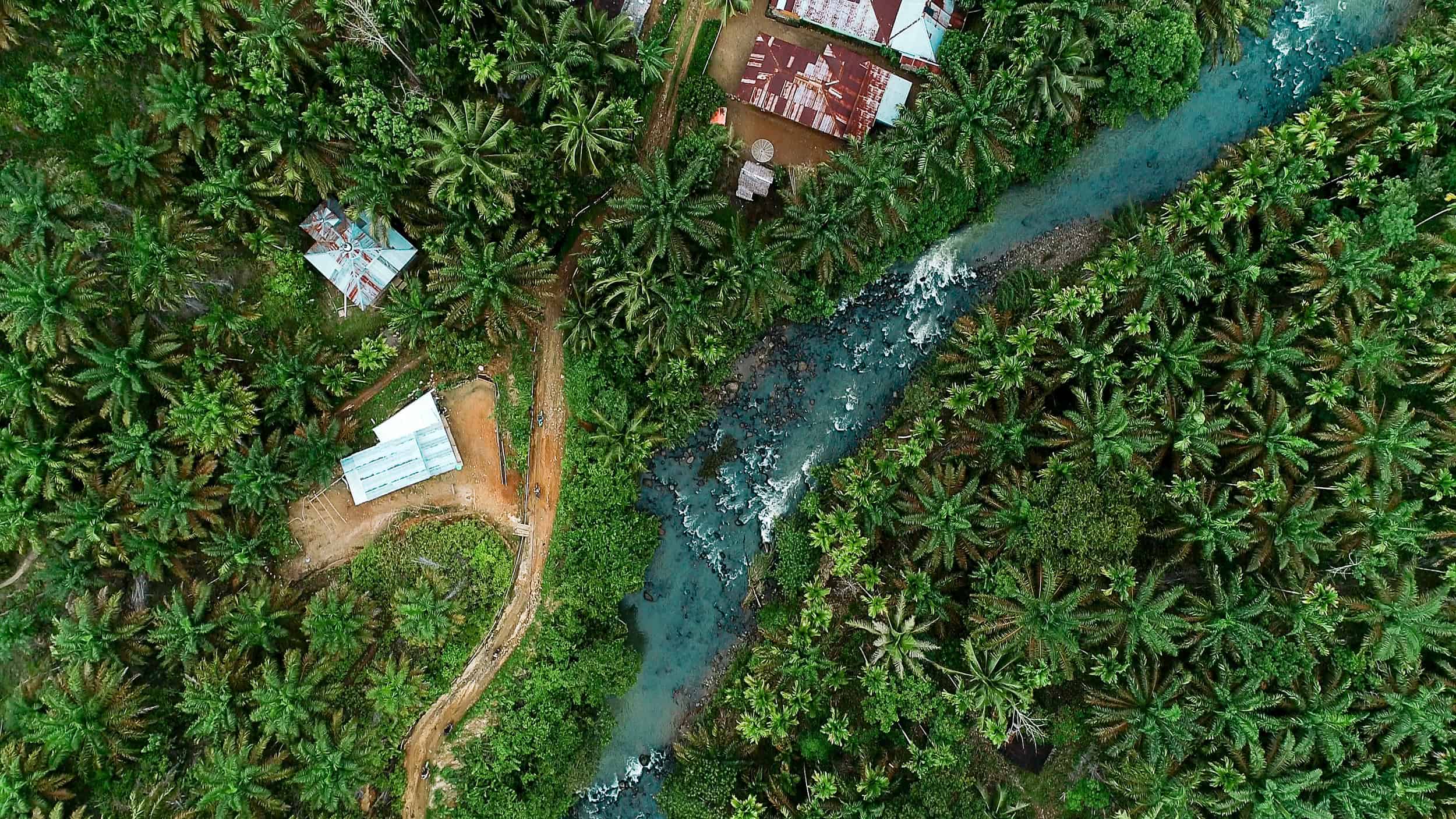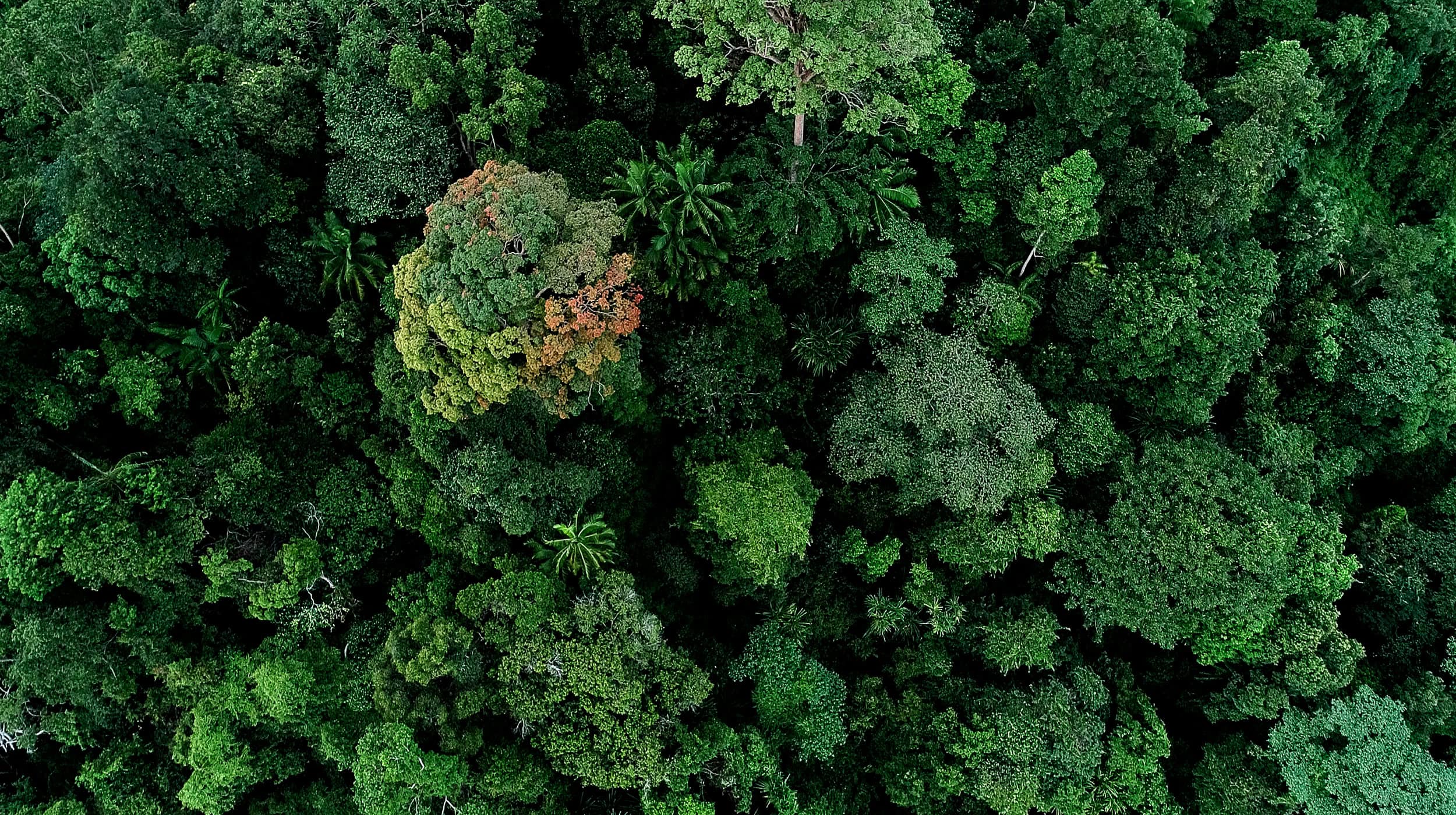
The air is thick with moisture. It’s 34 degrees Celsius and I’m standing at the bottom of a jungle-swathed mountain range, among a cacophony of langurs, cicadas and miscellaneous tropical birds. Before me is not quite a village but a sparse collection of smallholdings with a smattering of chickens, the odd cow and a few goats. Individual palm oil trees and rice paddies blend into the jungle canopy, one vivid shade of green enveloping the next. It’s hard to see where the rice grows and the water flows, I realize, as one of my boots completely submerges. I’m following a local group known as the Patroli Anak Nagari, or the “Pagari” unit for short. A small team of local trackers, all of whom have been drawn together to monitor and protect one infamous cat. This is the “Land of the Tiger,” better known as West Sumatra.
Between 2008 and 2018, according to the IUCN the tiger population in Sumatra declined about 10%, partly due to retaliatory killing by local communities as a result of human wildlife conflict. Though a large proportion of these animals live in National parks, the vast majority of tiger habitat lies outside of these protected areas. Here in Western Sumatra, only 13% of primary forest remains untouched (see Global Forest Watch). For local people living and working in agriculture, encounters with these cats are increasing. With an estimated 393 (173 – 883) adult individuals left in the wild, the future of the Sumatran tiger hangs on the ability of humans and tigers to coexist. I have come to get a better understanding of what this might look like, from one of the few cultures left on Earth with the desire and skill set to do so.*
We’re tracing the footprints of an adult male and, potentially, a female with cub. The team here is equipped with a camera trap, a heat-detecting drone and an explosive sound device to deter the cats before we can surprise them — or they can surprise us (I’m not quite sure which sounds more favorable). They are a passionate bunch, all smiles and pure adoration for this big predator. This is remarkable, since many of these members were drawn into this circle as a result of direct predation on their own livestock.
I was invited along by SINTAS (Save Indonesia’s Nature and Threatened Species), a scientifically led conservation organisation based in Jakarta, and BKSDA (West Sumatra Natural Resource Conservation Agency), a government body in Sumatra that established these units. The Pagari teams are a relatively new concept, launched first as one single unit at the end of 2021 and now amounting to six teams in six separate areas and growing. Their operational goal remains the same: to collect data for scientists and policymakers, to educate locals in conservation, and to mitigate conflict before any cat or person is harmed — a realistic possibility here. In the last 23 years, there have been around 200 incidents of human death or injury by tigers (see Global Environmental Agency).
We’re tracing the footprints of an adult male and, potentially, a female with cub. The team here is equipped with a camera trap, a heat-detecting drone and an explosive sound device to deter the cats before we can surprise them — or they can surprise us (I’m not quite sure which sounds more favorable). They are a passionate bunch, all smiles and pure adoration for this big predator. This is remarkable, since many of these members were drawn into this circle as a result of direct predation on their own livestock.
I was invited along by SINTAS (Save Indonesia’s Nature and Threatened Species), a scientifically led conservation organisation based in Jakarta, and BKSDA (West Sumatra Natural Resource Conservation Agency), a government body in Sumatra that established these units. The Pagari teams are a relatively new concept, launched first as one single unit at the end of 2021 and now amounting to six teams in six separate areas and growing. Their operational goal remains the same: to collect data for scientists and policymakers, to educate locals in conservation, and to mitigate conflict before any cat or person is harmed — a realistic possibility here. In the last 23 years, there have been around 200 incidents of human death or injury by tigers (see Global Environmental Agency).
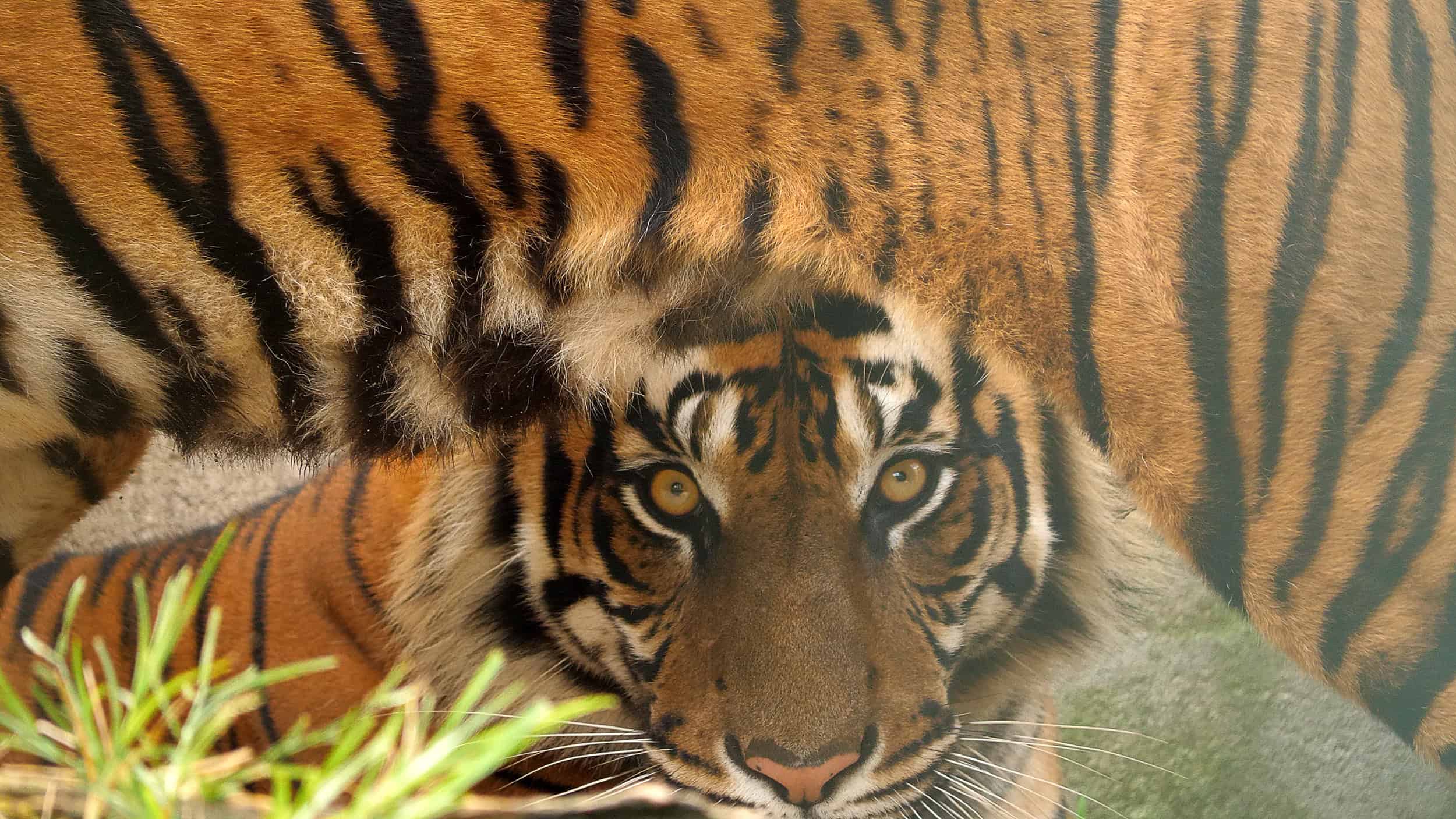
It’s a surreal feeling, looking down at the mud to see a fresh print the size of your hand and knowing it belongs to an animal perfectly capable of eating you. As romanticized as my Western views on tigers are, the thought of meeting one around the next bend remains daunting. Yet here, children still play outside, cattle graze freely (or tethered to the nearest tree as if in an iconic dinosaur film), and women still tend to their crops alone. The Minang people are different from the modern world creeping up around them. They have lived in these volcanic jungles for thousands of years, sharing their home safely with all kinds of dangerous species. This is the way it has always been, a comfortable relationship between competing predators, but it is becoming a rarity.
“We believe if you’re lost in the jungle and you see a tiger, the wise being will show you the way home,” one of the Pagari team members explains earnestly.
“So you’re not scared of them?” I prod.
“No. For us, a scarier place would be a jungle with no tigers at all.”
It is this notion that this coalition is hoping to preserve and cultivate once more. While the rest of Sumatra is seeing increasing fatalities on both sides of the human/wildlife conflict spectrum, Western Sumatra remains one of the few places left on Earth where many villagers still welcome the hazards of living alongside these animals, based on their intrinsic value alone.
“We believe if you’re lost in the jungle and you see a tiger, the wise being will show you the way home,” one of the Pagari team members explains earnestly.
“So you’re not scared of them?” I prod.
“No. For us, a scarier place would be a jungle with no tigers at all.”
It is this notion that this coalition is hoping to preserve and cultivate once more. While the rest of Sumatra is seeing increasing fatalities on both sides of the human/wildlife conflict spectrum, Western Sumatra remains one of the few places left on Earth where many villagers still welcome the hazards of living alongside these animals, based on their intrinsic value alone.
It is clear from the spectacle my arrival has caused that tourism has not graced this jungle yet. Few outsiders have penetrated this village to pollute their principles. The Minang people see tigers as their ancestors — guardians of the forest. Removal of the cats is believed to be bad luck, and with so much reliance on nature to provide food and a healthy income, ill fortune is not a risk many of the villages are willing to take lightly.
“It was nighttime. I heard my dog making a lot of noise, so I came out to see what it was and found a tiger in my garden,” the cheerful local says, gesturing to the grass in front of us. His family home is built on the edge of a steep rock face that merges into the small area of grass, exposing a small wood-en construction. The man built it purposefully to house his very nervous-looking dog, which is currently shivering inside, surveying us skeptically. Pets are not allowed inside homes here due to religious beliefs, but it’s obvious this man adores his friend. “So I grab one of these metal pipes and I bang it really hard against this bar, until the tiger is scared away.” Apparently, this tiger has visited this garden more than once, but the man seems very unconcerned. He continues to reminisce enthusiastically with another team member about a different occasion when he stumbled across a mother and cubs during his morning dog walk: “I thought about taking my phone out to take a picture, but then I thought better.”
I watch as the team points a device up toward the air, pouring in a small amount of flammable liquid and lighting the lower end. An explosion reminiscent of a large air rifle escapes from the barrel, echoing into the distance, hopefully enough to drive the tigers out of the paddy fields and back into the safety of the jungle. Only time will tell.
“It was nighttime. I heard my dog making a lot of noise, so I came out to see what it was and found a tiger in my garden,” the cheerful local says, gesturing to the grass in front of us. His family home is built on the edge of a steep rock face that merges into the small area of grass, exposing a small wood-en construction. The man built it purposefully to house his very nervous-looking dog, which is currently shivering inside, surveying us skeptically. Pets are not allowed inside homes here due to religious beliefs, but it’s obvious this man adores his friend. “So I grab one of these metal pipes and I bang it really hard against this bar, until the tiger is scared away.” Apparently, this tiger has visited this garden more than once, but the man seems very unconcerned. He continues to reminisce enthusiastically with another team member about a different occasion when he stumbled across a mother and cubs during his morning dog walk: “I thought about taking my phone out to take a picture, but then I thought better.”
I watch as the team points a device up toward the air, pouring in a small amount of flammable liquid and lighting the lower end. An explosion reminiscent of a large air rifle escapes from the barrel, echoing into the distance, hopefully enough to drive the tigers out of the paddy fields and back into the safety of the jungle. Only time will tell.
“We believe if you’re lost in the jungle and you see a tiger, the wise being will show you the way home,”one of the Pagari team members explains earnestly.
“So you’re not scared of them?” I prod.
“No. For us, a scarier place would be a jungle with no tigers at all.”
“So you’re not scared of them?” I prod.
“No. For us, a scarier place would be a jungle with no tigers at all.”


This is just one example of the interactions that are becoming more and more frequent as tigers and people are pushed closer and closer together. With increasing exports of oil, animal fats and rubber, along with the development of a country-length highway to link the North and South of the island, the jungle (the tigers’ natural habitat) is fracturing and shrinking. Not all farmers can afford to be tolerant when it comes to big hungry cats. Between 2001 and 2016, over 1,247 families reported cases of livestock predation. For subsistence farmers, each animal is an integral part of their income. In response, the Pangeri team has doubled down their community work with the construction of large overnight communal pens.
At the next location, we are welcomed into a formal office to meet with local elder and councilor Mr. Samsul. Wearing an official uniform, he looks me dead in the eye, conveying a very serious expression. “Tigers are important to me person-ally, because my granddad was the last Pawang of this village.”
Confused, I first think it’s a problem with the translation, but after some back-and-forth, the man continues. The story begins in a tiny hillside village deep in the heart of West Sumatra’s jungle. In the 1930s, everybody in the area knew of Ilyas Pono Manih, the man who could “talk” to tigers. Ilyas was a Pawang, a sacred holy practitioner believed to have natural powers and training that enabled him to capture and speak to tigers. Whenever a villager had a problem with a tiger — perhaps they lost a goat or a cow — Ilyas would be summoned. He would beckon the offending tigers into a cage via a ceremony of chants and prayers. Once they were trapped, he would converse with the animals to establish if they were guilty of the crime. It was then his job to release innocent tigers, or to remove the guilty ones. A slightly bloodier approach to global conservation than today’s efforts, but one that kept the peace across this jungle for thousands of years nonetheless.
At the next location, we are welcomed into a formal office to meet with local elder and councilor Mr. Samsul. Wearing an official uniform, he looks me dead in the eye, conveying a very serious expression. “Tigers are important to me person-ally, because my granddad was the last Pawang of this village.”
Confused, I first think it’s a problem with the translation, but after some back-and-forth, the man continues. The story begins in a tiny hillside village deep in the heart of West Sumatra’s jungle. In the 1930s, everybody in the area knew of Ilyas Pono Manih, the man who could “talk” to tigers. Ilyas was a Pawang, a sacred holy practitioner believed to have natural powers and training that enabled him to capture and speak to tigers. Whenever a villager had a problem with a tiger — perhaps they lost a goat or a cow — Ilyas would be summoned. He would beckon the offending tigers into a cage via a ceremony of chants and prayers. Once they were trapped, he would converse with the animals to establish if they were guilty of the crime. It was then his job to release innocent tigers, or to remove the guilty ones. A slightly bloodier approach to global conservation than today’s efforts, but one that kept the peace across this jungle for thousands of years nonetheless.


Now an ancient relic of the Minang people, whose de-scendants still live in this village, Ilyas wasthe last Pawang here … until now. Looking around at the pas-sionate Pageri squad, I can’t help but draw parallels.
The villagers here live so remotely, far away from modern medical help, alternative employment opportunities or over-ly stocked supermarket shelves. Just like their ancestors who lived here before them, their existence is entirely interwoven with this land. They know better than most how the health of this ecosystem relies on predators like the tiger. It has always been a fine balancing act. Times may be harder now, as the outside world pushes in on the island’s resources, but they re-ally are bonded with these big cats in a connection that runs deeper than any transactional values we know today. It is not just the tiger population that needs protection here, but the wisdom, tolerance and experience of these ancient cultures too. In a world with so few wild spaces left for life to exist, our ability to coexist is crucial.
**Note: The designated paragraph in the beginning of the article has been updated from the original print edition to reflect newly understood research.
The villagers here live so remotely, far away from modern medical help, alternative employment opportunities or over-ly stocked supermarket shelves. Just like their ancestors who lived here before them, their existence is entirely interwoven with this land. They know better than most how the health of this ecosystem relies on predators like the tiger. It has always been a fine balancing act. Times may be harder now, as the outside world pushes in on the island’s resources, but they re-ally are bonded with these big cats in a connection that runs deeper than any transactional values we know today. It is not just the tiger population that needs protection here, but the wisdom, tolerance and experience of these ancient cultures too. In a world with so few wild spaces left for life to exist, our ability to coexist is crucial.
**Note: The designated paragraph in the beginning of the article has been updated from the original print edition to reflect newly understood research.