You’ve clicked on premium content
To continue reading, please subscribe to one of our affordable plans.
Already subscribed?
Sign in
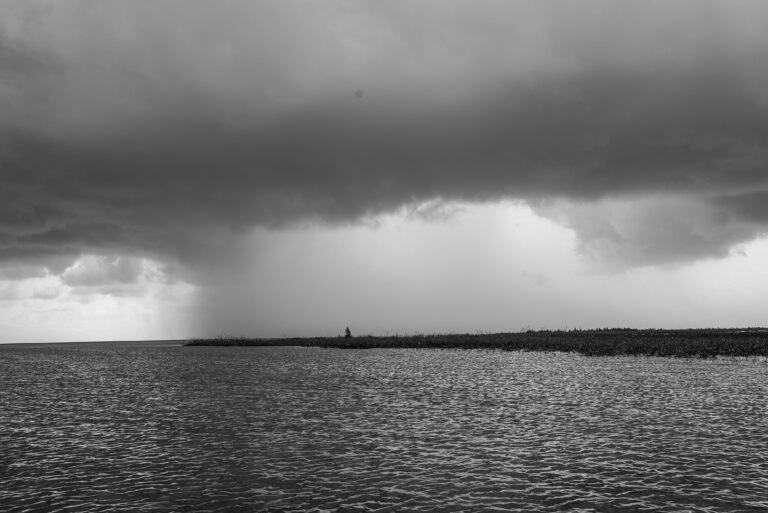
Meko Glinton, Bahamian bonefish guide extraordinaire, refused to blink. On the evening of August 29, 2019, he watched the television with deep concentration, as if the Doppler on the screen were a double-digit bonefish tailing its way across a flat. A storm named Dorian had manifested into a Category 5 hurricane and was sweeping north toward his home in McLean’s Town. By nightfall, Meko and his family would evacuate, driving 20 miles west to Freeport to weather the storm’s landfall with Grand Bahama’s prudent residents, most of whom had waited out a few hurricanes in their lives. But none like this one.
“Doreen,” as she would come to be called by locals, fixed her catastrophic eye on East End and unleashed a thousand-year fury. With winds approaching 185 miles per hour, the storm of the millennium razed nearly every dwelling, pine tree and palm in its elliptical path. In the end, Dorian took over 200 lives and left 70,000 homeless and 3.4 billion dollars of destruction in her wake. With a stunning fortitude, amid horrors and the aftermath of grief, Meko would emerge from the wreckage. This is the story of how he began to rebuild one of the most vital saltwater fishing communities on earth.
Born into the guiding trade 44 years ago, Meko was steering borrowed skiffs through skinny, mangrove-lined channels with his own shaved palm push-pole before he could reach the gas pedal in a car. He came up under the tutelage of his father, Stanley Glinton, who had learned from Meko’s legendary grandfather, David Pinder Sr., known around East End as “Senior” and the industry’s cornerstone — literally the first Bahamian bonefish guide. He was a seminal figure whose knowledge and acumen initiated, way back in 1955, the country’s sportfish-centered economy, which now brings nearly 2 billion dollars each year to the island. In the early 2000s, three generations of Pinders guided at the storied Deep Water Cay Club, and by the ripe age of 21, Meko had been given the keys to the kingdom.
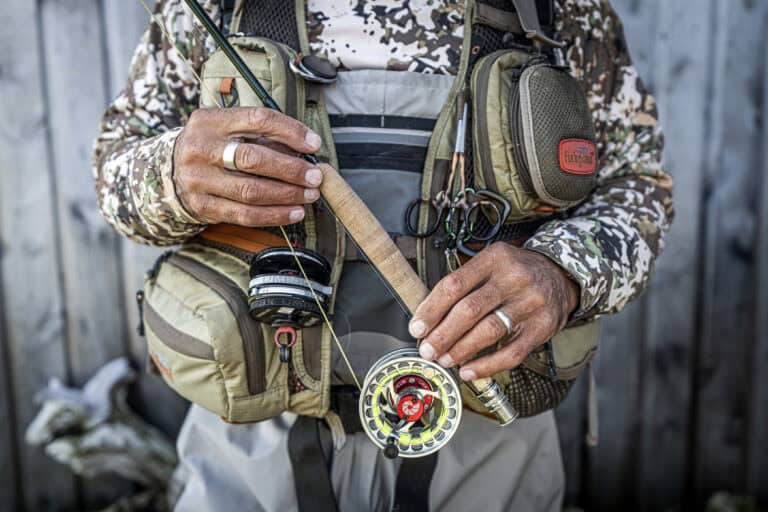
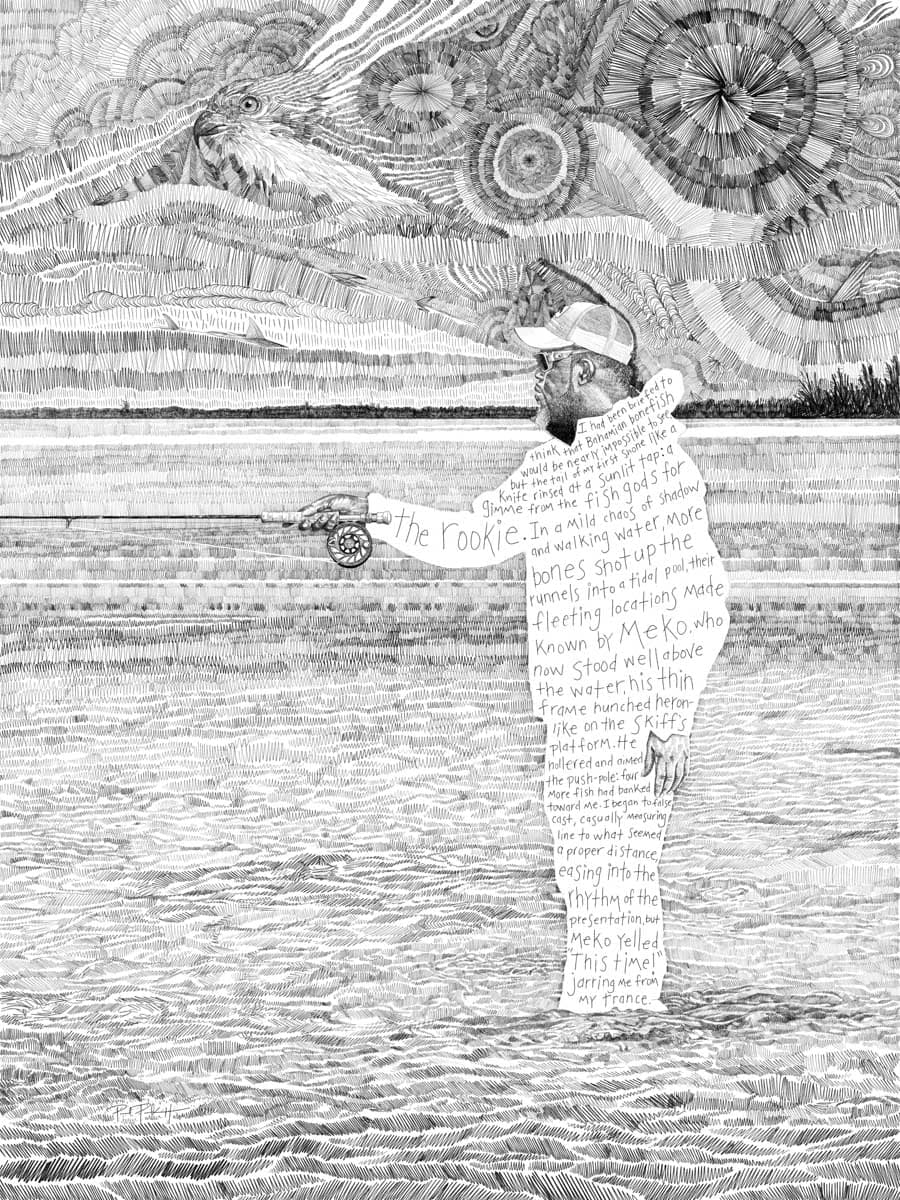
There are several attributes a flats guide must possess to even be serviceable at their craft — keen vision, topographical knowledge and ability to pole a skiff, to name a few. The additional, transcendent skill that all world-class guides possess is superior communication ability. More often than not, a bonefish appears in the client’s eyes only by the grace and specificity of their guide’s directions: calls to strip, to clock the rod around to, say, nine o’clock, to look into the patch of turtle grass, not past it. Meko’s knack for transmitting in precise language to his often nerve-jumbled clients what transpires on the flat before him is what sets him apart from the good, even great, Bahamian flats guides. It’s this defining characteristic that led Flip Pallot to call Meko “one of the five best flats guides on the planet.” It’s no wonder that he was often tasked with guiding the lodge’s most famous guests, the likes of Michael Keaton, Liam Neeson and Lefty Kreh, among many other luminaries.
By the time he’d reached his late 20s, Meko’s signature fly, the Meko Special — a spawning shrimp imitation — had appeared in most of the major fishing catalogs and he was, for all intents and purposes, the face of, and by far the most requested guide at, Deep Water Cay Club. After several years on a continued ascent, he and his wife Samantha were made managers at the exclusive North Riding Point Club not far down the road. The mentorship he received there, coupled with his upward trajectory, led Meko to dream, modestly, of building his own small lodge, to put out a shingle of his own, called the Meko Experience, which aimed to be one of only a few Bahamian-owned outposts on the island. His vision had nearly reached fruition when Dorian hit.
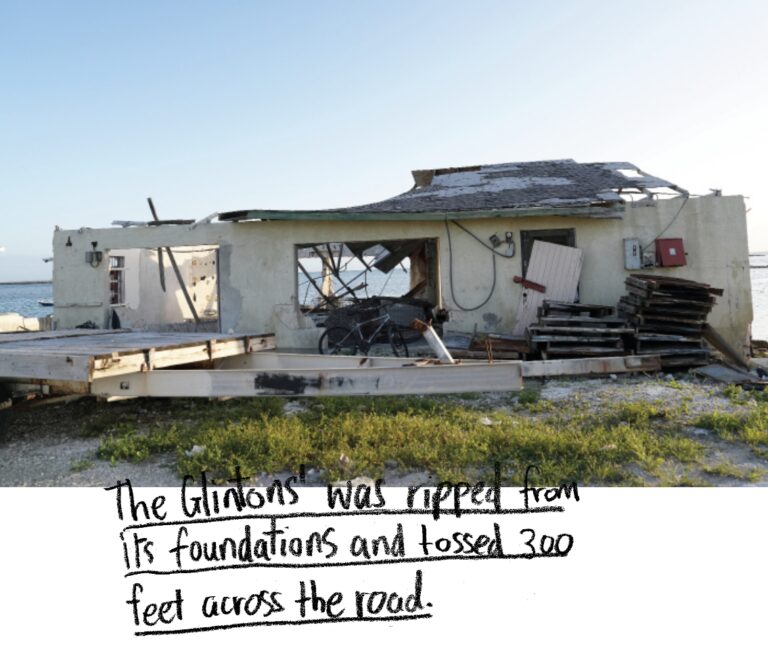
Following the storm, when it was deemed safe, Meko returned to assess the wreckage and found his neighborhood block covered in a veritable hill of uprooted and storm-deposited tree trunks. Fishing skiffs and conch-cracking shanties had been tossed and left out to weather like buoys. Nearly everyone at East End had lost their home. The Glintons’ was ripped from its foundation and tossed 300 feet across the road. No one would have faulted Meko if he had simply relinquished his vision of autonomy and returned to work at one of the local outposts once they were operational again. But as his grandfather would say on a tough day of fishing, “This is not a game you play quitting.” And so, despite all, Meko’s dream of building his own lodge, one that he saw as a potentially rejuvenating force in the community, was instead fortified.
“If you want to see what resilience looks like,” Meko says in an interview in a new film directed by Harrison Buck, “come to McLean’s Town. A lot of people were displaced. I’ve seen people receive camping tents and put those tents right where their houses used to be. Folks are not waiting for their homes to be finished. They’re not waiting for beds or anything; they just want to get back in there.”
The hardscrabble local mindset heartened Meko, but it was ultimately his deep hope for youth on the island, his own children included, that inspired him to forge ahead. “When this elderly generation passes on,” Meko’s father, Stan, says, referring to his own generation of guides, “[this craft] could die out. There aren’t many of the young guys left to get into it. So between seas of tents and hands still clearing seaweed from the shores, Meko created a program where he started introducing [the guiding trade] in schools.”
“Doreen,” as she would come to be called by locals, fixed her catastrophic eye on East End and unleashed a thousand-year fury. With winds approaching 185 miles per hour, the storm of the millennium razed nearly every dwelling, pine tree and palm in its elliptical path. In the end, Dorian took over 200 lives and left 70,000 homeless and 3.4 billion dollars of destruction in her wake. With a stunning fortitude, amid horrors and the aftermath of grief, Meko would emerge from the wreckage. This is the story of how he began to rebuild one of the most vital saltwater fishing communities on earth.
Born into the guiding trade 44 years ago, Meko was steering borrowed skiffs through skinny, mangrove-lined channels with his own shaved palm push-pole before he could reach the gas pedal in a car. He came up under the tutelage of his father, Stanley Glinton, who had learned from Meko’s legendary grandfather, David Pinder Sr., known around East End as “Senior” and the industry’s cornerstone — literally the first Bahamian bonefish guide. He was a seminal figure whose knowledge and acumen initiated, way back in 1955, the country’s sportfish-centered economy, which now brings nearly 2 billion dollars each year to the island. In the early 2000s, three generations of Pinders guided at the storied Deep Water Cay Club, and by the ripe age of 21, Meko had been given the keys to the kingdom.
There are several attributes a flats guide must possess to even be serviceable at their craft — keen vision, topographical knowledge and ability to pole a skiff, to name a few. The additional, transcendent skill that all world-class guides possess is superior communication ability. More often than not, a bonefish appears in the client’s eyes only by the grace and specificity of their guide’s directions: calls to strip, to clock the rod around to, say, nine o’clock, to look into the patch of turtle grass, not past it. Meko’s knack for transmitting in precise language to his often nerve-jumbled clients what transpires on the flat before him is what sets him apart from the good, even great, Bahamian flats guides. It’s this defining characteristic that led Flip Pallot to call Meko “one of the five best flats guides on the planet.” It’s no wonder that he was often tasked with guiding the lodge’s most famous guests, the likes of Michael Keaton, Liam Neeson and Lefty Kreh, among many other luminaries.
By the time he’d reached his late 20s, Meko’s signature fly, the Meko Special — a spawning shrimp imitation — had appeared in most of the major fishing catalogs and he was, for all intents and purposes, the face of, and by far the most requested guide at, Deep Water Cay Club. After several years on a continued ascent, he and his wife Samantha were made managers at the exclusive North Riding Point Club not far down the road. The mentorship he received there, coupled with his upward trajectory, led Meko to dream, modestly, of building his own small lodge, to put out a shingle of his own, called the Meko Experience, which aimed to be one of only a few Bahamian-owned outposts on the island. His vision had nearly reached fruition when Dorian hit.
Following the storm, when it was deemed safe, Meko returned to assess the wreckage and found his neighborhood block covered in a veritable hill of uprooted and storm-deposited tree trunks. Fishing skiffs and conch-cracking shanties had been tossed and left out to weather like buoys. Nearly everyone at East End had lost their home. The Glintons’ was ripped from its foundation and tossed 300 feet across the road. No one would have faulted Meko if he had simply relinquished his vision of autonomy and returned to work at one of the local outposts once they were operational again. But as his grandfather would say on a tough day of fishing, “This is not a game you play quitting.” And so, despite all, Meko’s dream of building his own lodge, one that he saw as a potentially rejuvenating force in the community, was instead fortified.
“If you want to see what resilience looks like,” Meko says in an interview in a new film directed by Harrison Buck, “come to McLean’s Town. A lot of people were displaced. I’ve seen people receive camping tents and put those tents right where their houses used to be. Folks are not waiting for their homes to be finished. They’re not waiting for beds or anything; they just want to get back in there.”
The hardscrabble local mindset heartened Meko, but it was ultimately his deep hope for youth on the island, his own children included, that inspired him to forge ahead. “When this elderly generation passes on,” Meko’s father, Stan, says, referring to his own generation of guides, “[this craft] could die out. There aren’t many of the young guys left to get into it. So between seas of tents and hands still clearing seaweed from the shores, Meko created a program where he started introducing [the guiding trade] in schools.”

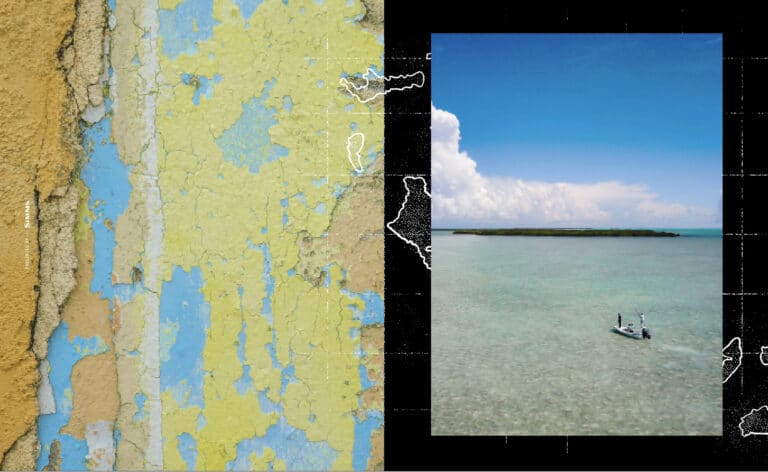
Soon enough, dozens of local youngsters lined up on the beach where Meko taught about casting, the sustainable (if its environment is cared for) resource of bonefish and potential future jobs in the industry. As they fought with and occasionally attained the proper rhythm of a double haul, the next generation of guides shot infectious smiles and laughing glances at their instructor. Perhaps hope is the thing — to borrow and butcher an Emily Dickinson line — with a fly rod in hand.
Buck, whose feature-length Meko is running at film festivals globally, has known Meko for decades and remains astonished by his friend’s outlook: “He has this incredible perspective that all boats rise with high tide, and it’s not about competing with each other. There aren’t that many guides in the world that are out there teaching youth to become guides. He doesn’t see it as competition. He sees it as the future, and how he rebuilds a whole half of an island.”
Indeed, Meko, who in his mid-40s calls himself one of the youngest guides on the island, hopes “to develop a fly-fishing academy where the youth could come, where we could teach them all they need to know about the industry and conservation. I hope that Samantha and I can inspire other Bahamians [to build on their own lodges], to say, ‘Hey, you know what, we could do the same thing.’” Tents finally replaced with new walls, with their own lodge’s structure going up three years ago, the Meko Experience Fly Fishing and Spa is already paving the way for coming generations, which is, above all, the Glinton and Pinder way.
At 15, Meko’s eldest son Mike is already well on his way to ensuring that the family will add a fourth generation of Bahamian guides to its legacy. Mike can sling a 60-foot double haul into a headwind and drop the fly on a Bahamian 10-cent piece, the tails side of which features, of course, an image of two bonefish.
On a windy day this past May, Mike stands on the bow of the skiff gathering the slack line from his cast, then scans the water and listens for his father to bark out instructions. The wind blows straight up the flat, frothing the water.
“Bonefish coming, Big Mike,” Meko intones. “Twelve o’clock. Twelve o’clock.” Mike straightens his posture, slings out two false casts, sidearms to cut the wind, then lets the forward cast fly.
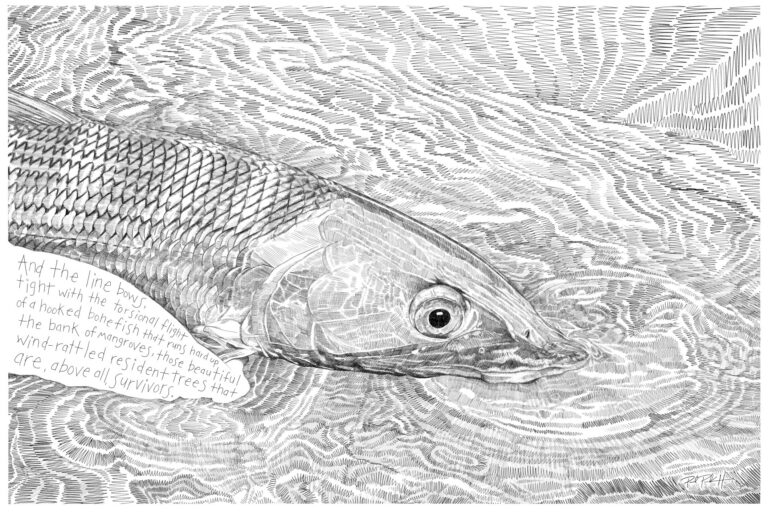
“Good. Strip,” Meko says, pausing for an unbearably quiet moment. “Long strip, he’s coming. Long strip, he’s on!” And the line bows, tight with the torsional flight of a hooked bonefish that runs hard up the bank of mangroves, those beautiful wind-rattled resident trees that are, above all, survivors.
The feature-length documentary MEKO will be releasing soon. Follow @pandioncreative on
Instagram to stay up to date on the film’s status.
Buck, whose feature-length Meko is running at film festivals globally, has known Meko for decades and remains astonished by his friend’s outlook: “He has this incredible perspective that all boats rise with high tide, and it’s not about competing with each other. There aren’t that many guides in the world that are out there teaching youth to become guides. He doesn’t see it as competition. He sees it as the future, and how he rebuilds a whole half of an island.”
Indeed, Meko, who in his mid-40s calls himself one of the youngest guides on the island, hopes “to develop a fly-fishing academy where the youth could come, where we could teach them all they need to know about the industry and conservation. I hope that Samantha and I can inspire other Bahamians [to build on their own lodges], to say, ‘Hey, you know what, we could do the same thing.’” Tents finally replaced with new walls, with their own lodge’s structure going up three years ago, the Meko Experience Fly Fishing and Spa is already paving the way for coming generations, which is, above all, the Glinton and Pinder way.
At 15, Meko’s eldest son Mike is already well on his way to ensuring that the family will add a fourth generation of Bahamian guides to its legacy. Mike can sling a 60-foot double haul into a headwind and drop the fly on a Bahamian 10-cent piece, the tails side of which features, of course, an image of two bonefish.
On a windy day this past May, Mike stands on the bow of the skiff gathering the slack line from his cast, then scans the water and listens for his father to bark out instructions. The wind blows straight up the flat, frothing the water.
“Bonefish coming, Big Mike,” Meko intones. “Twelve o’clock. Twelve o’clock.” Mike straightens his posture, slings out two false casts, sidearms to cut the wind, then lets the forward cast fly.
“Good. Strip,” Meko says, pausing for an unbearably quiet moment. “Long strip, he’s coming. Long strip, he’s on!” And the line bows, tight with the torsional flight of a hooked bonefish that runs hard up the bank of mangroves, those beautiful wind-rattled resident trees that are, above all, survivors.
The feature-length documentary MEKO will be releasing soon. Follow @pandioncreative on
Instagram to stay up to date on the film’s status.