The same external factors that mold our household’s hunting seasons can affect the annual pasta sauce too: the interminable Texas summer, busy schedules and plain luck all alter the yearly freezer clean, creating a “vintage wine” approach. Each year’s batch is unique and distinct from the previous. This is how we make our ragù, or really Bolognese sauce that someone from Bologna would assuredly tell me is not Bolognese.
We all know it in some form: it may be “spaghetti sauce”, a highly reductive yet comforting sauce that’s probably made with ground beef and some store bought tomato sauce, accompanied by appropriately overcooked spaghetti. It might be a sauce of ground veal, pork and beef, which would adhere to the traditions of its home.
In my house, it’s animals, ground and cooked with some sort of cured or smoked fatty pork (invariably a wild pig) with tomato, spices, a mire poix of carrot, onion and celery and finished with some sort of cream (probably half and half since I always forget to buy the heavy cream and just add some of the stuff usually reserved for our coffee). This sauce will be tossed with just-cooked dried pasta, some fresh pasta if I’m feeling productive, or most likely baked into a lasagna and topped with a final layer of bechamel and finely grated Parmesan.
It is an opportunity to clear the way for what we hope to be a very full freezer in the near future, utilizing the odds and ends, equalizing them in the slow-cooked, tomatoey broth until they’re part of a cohesive team and indistinguishable from one another.
This also affords the innocuous, one-off and random pieces their last chance for acknowledgement and remembrance.
We all know it in some form: it may be “spaghetti sauce”, a highly reductive yet comforting sauce that’s probably made with ground beef and some store bought tomato sauce, accompanied by appropriately overcooked spaghetti. It might be a sauce of ground veal, pork and beef, which would adhere to the traditions of its home.
In my house, it’s animals, ground and cooked with some sort of cured or smoked fatty pork (invariably a wild pig) with tomato, spices, a mire poix of carrot, onion and celery and finished with some sort of cream (probably half and half since I always forget to buy the heavy cream and just add some of the stuff usually reserved for our coffee). This sauce will be tossed with just-cooked dried pasta, some fresh pasta if I’m feeling productive, or most likely baked into a lasagna and topped with a final layer of bechamel and finely grated Parmesan.
It is an opportunity to clear the way for what we hope to be a very full freezer in the near future, utilizing the odds and ends, equalizing them in the slow-cooked, tomatoey broth until they’re part of a cohesive team and indistinguishable from one another.
This also affords the innocuous, one-off and random pieces their last chance for acknowledgement and remembrance.
The first thing I came across in the freezer was a small heart. I think it’s the heart from a little hog I shot at the end of summer, but I could be wrong. It’s in a zip-lock bag instead of a carefully vacuum-sealed one, so there’s the clue: I was probably tired when I brought it into the freezer, so that means it was probably late. I shot that hog at night, from the back porch while it fed in the little oak and pecan grove behind the house. I feel no shame for this hunting methodology. There are a lot of pigs on this property — my presence there is through the generosity of the landowner — and his sole demand for me is to kill all the pigs. The pigs are tasty and pecan-fattened, so rules is rules. The heart, which is a muscle, will be great in the sauce.
Next is a small bag of “back fat” indicating, again, feral pig. Since the heart is lean, this addition makes sense; I’m off to a good start.
Here’s a pound of ground beef. Beef is not at all a commonly found protein in this freezer, but I participated in a really fun dinner in the fall that featured an entire cow, fed entirely on spent whiskey grains from a local distillery. There was a slight overabundance of this beef and, since it was exceptional beef, I brought some home. But, real estate in the freezer is limited, so it goes in the pot.
Small, fatty pieces of ham, left over from Thanksgiving, and a chunk of guanciale go next into the rapidly filling tray of meats bound for the kitchen inside. The guanciale, in stark opposition to the other random items going into this sauce, was made specifically for this sauce.
Next is a small bag of “back fat” indicating, again, feral pig. Since the heart is lean, this addition makes sense; I’m off to a good start.
Here’s a pound of ground beef. Beef is not at all a commonly found protein in this freezer, but I participated in a really fun dinner in the fall that featured an entire cow, fed entirely on spent whiskey grains from a local distillery. There was a slight overabundance of this beef and, since it was exceptional beef, I brought some home. But, real estate in the freezer is limited, so it goes in the pot.
Small, fatty pieces of ham, left over from Thanksgiving, and a chunk of guanciale go next into the rapidly filling tray of meats bound for the kitchen inside. The guanciale, in stark opposition to the other random items going into this sauce, was made specifically for this sauce.
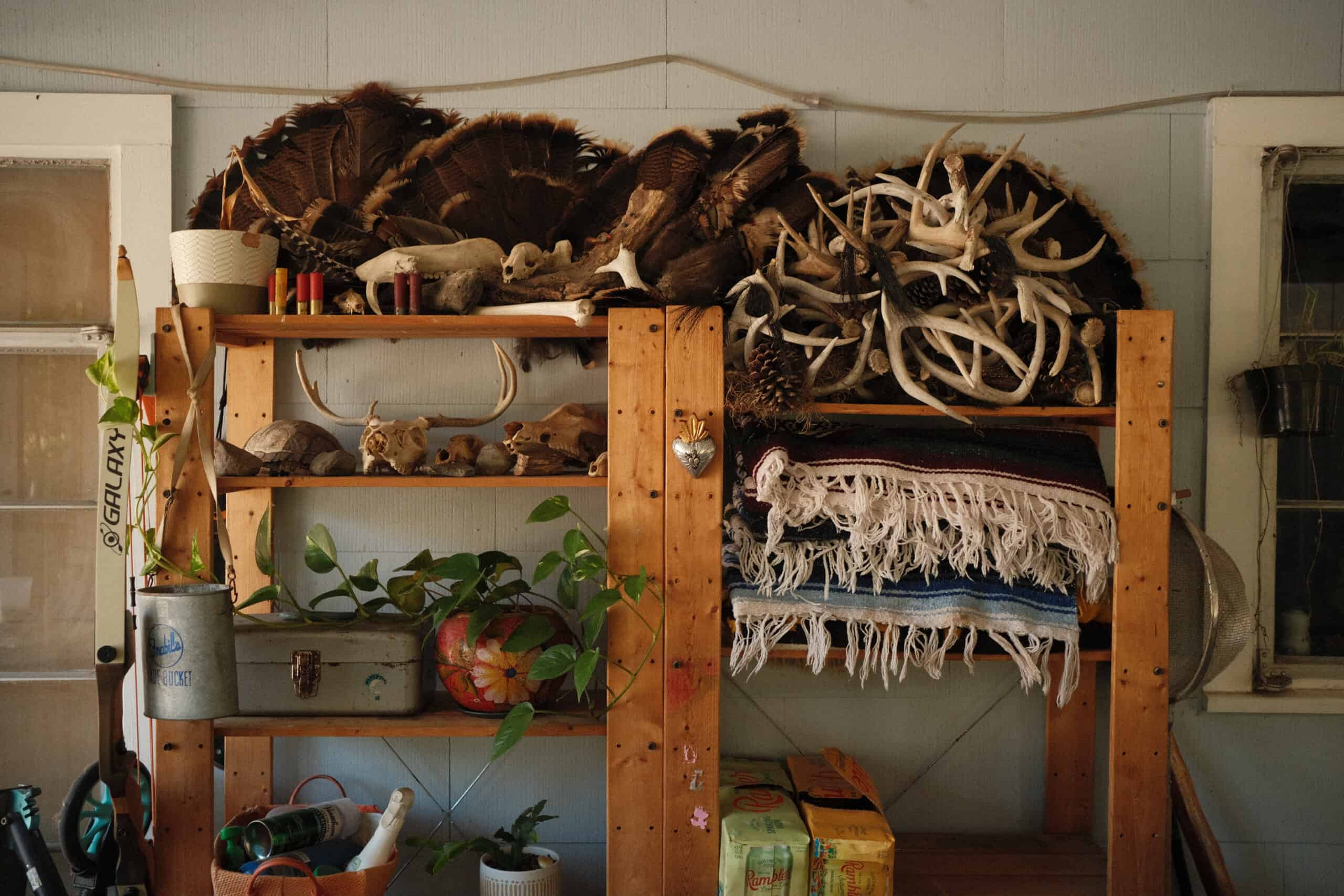
The hog providing the guanciale was manna; a buzzer-beating gift from the Hunting Gods at the terminus of a long, unfruitful walk in search of a big fat sow. She and her two compatriots were contentedly–if not irresponsibly–eating pecans. We postulate that the internal crunching of the pecan consumption was so loud within their own skulls that they couldn’t hear our walking in the drought-dried leaves. Their happy vocalizations–content grunting from eating said pecans–also alerted us to their presence in the last minute of waning light before it was full dark. I shot a pig, not knowing that it was the one I wanted and that my freezer dreams were about to come true. She weighed probably 120 pounds and had an absurd and thick fat cap on her, along with large jowls. Jowls, or cheeks, are traditionally made into guanciale in Italy. I cured the jowls with juniper, fennel, garlic and hot pepper, just like Italians do, but then I smoked them over pecan branches, just like Texans do. Daydreaming of the perfect first, foundational step to making my ragù, this would become my fatty initial ingredient that would provide fat for browning what was to come. This might be the only proactive item in an otherwise reactive sauce.
The big sow’s foreshank presents itself next. I like foreshanks, but they tend to be the last things I use. Without the same composition as a hindshank, with its ribbons of connective tissue and therefore more gelatinous tenderness, they are–whether venison, aoudad or hog–often a proverbial can that gets kicked down the road. I’ll debone and grind this foreshank, reserving the bone to be added to the sauce while it cooks to contribute extra gelatin. This bone will be removed and discarded at the end.
A bag marked “aoudad stew” had fallen behind the bin. Perfect. This is the very last (I think) remnant of my daughter’s aoudad from January of this year. She made an incredible, quick shot on it as it ran along the top of a cliff above us, startling the three of us as we walked into a fiercely cold wind in search of bedded hogs along the riverbank. Since these invasive sheep weren’t known to even be on this property, there was added computed time involved: Aoudad? Aoudad. Aoudad!
She performed brilliantly, anchoring the ram with a standing shot as he cruised past us. I am in the distinct minority of Texans that love to eat aoudad, and I consider promoting their consumption as a crusade of sorts. How they’re consumed matters not to me, a pound or so in the ragù will be a perfect stand-in for the traditional beef and that random package of fatback will help the otherwise lean aoudad nicely, too.
The big sow’s foreshank presents itself next. I like foreshanks, but they tend to be the last things I use. Without the same composition as a hindshank, with its ribbons of connective tissue and therefore more gelatinous tenderness, they are–whether venison, aoudad or hog–often a proverbial can that gets kicked down the road. I’ll debone and grind this foreshank, reserving the bone to be added to the sauce while it cooks to contribute extra gelatin. This bone will be removed and discarded at the end.
A bag marked “aoudad stew” had fallen behind the bin. Perfect. This is the very last (I think) remnant of my daughter’s aoudad from January of this year. She made an incredible, quick shot on it as it ran along the top of a cliff above us, startling the three of us as we walked into a fiercely cold wind in search of bedded hogs along the riverbank. Since these invasive sheep weren’t known to even be on this property, there was added computed time involved: Aoudad? Aoudad. Aoudad!
She performed brilliantly, anchoring the ram with a standing shot as he cruised past us. I am in the distinct minority of Texans that love to eat aoudad, and I consider promoting their consumption as a crusade of sorts. How they’re consumed matters not to me, a pound or so in the ragù will be a perfect stand-in for the traditional beef and that random package of fatback will help the otherwise lean aoudad nicely, too.
It is an opportunity to clear the way for what we hope to be a very full freezer in the near future, utilizing the odds and ends....this also affords the innocuous, one-off and random pieces their last chance for acknowledgement and remembrance.


I move on to the turkey shelf. Turkey freezer management has a different timeline, so I have to pause and think about it. Since the spring season is when I hunt turkeys, I have to remember that the current stock has to last until at least March, if I’m being presumptuous and assume I’ll get another bird by then. So the turkey goes mostly undisturbed with the exception of a couple of small bags of offal, which I guess to be the heart, liver and gizzard, since that’s how I usually package these. This offal is delightful in a ragù, and I sometimes make a pasta sauce with only that (and guanciale or its cousin, pancetta). In the spirit of making a big batch of sauce, it goes on the tray. One is labelled “Jesse TX Rio”, meaning my friend Janis wrote it. This must be my opening day bird from south Texas. We managed three birds between four people on this trip, which is low numbers for that time of year, that property and those hunters, but it was fun and educational. It was also the trip that a very large rattlesnake tried to crawl into my lap as I sat quietly waiting on a reluctant tom. I like to tell people that I levitated when I saw it coming at me. That snake was strangely unaffected and almost aloof to my presence, even though it seemed intent on being exactly where I was. I did not kill it, and I stand by that decision for reasons I can’t wholly explain. I never sensed any malice or aggression from the six-foot-long snake, but will never know its intent.
How many doves does it take to generate a PINT of cleaned dove offal? All of the hearts, livers and gizzards that didn’t go into dove liver pate (which is as good as you think it is) and dove boudin are here, and I think their new highest and best use is this game ragù. My wife got her first limit of doves this season and those 15 birds are certainly in here, so she’ll also have a stake in the storytelling of this sauce now too.
A large bag scrawled with “venison stew trim”, purposely set aside due to its prolific sinewy silverskin, joins the hog, beef, aoudad and turkey. I like to separate these pieces, generally from the belly and between the ribs, for long-cooked sauces like this where the collagen present in the silverskin will melt out and become gelatin, adding a distinct body and bounce to the sauce. I’ll say it again: don’t waste your time trimming the silver off. Choose your battles and use it for long, slow cooks where its inherent qualities–yes silverskin is a quality–pay off richly. This is off my most recent addition to the freezer, an animal from the current season. It is with a bit of boldness that I’ll add something so freshly acquired to a thing that’s intended to be a utilization of surplus, but I have a good feeling about the rest of this season (as far a deer go).
Almost done. I grab a couple of quarts of stock–one each of venison and hog–and begin the thawing process. As soon as the bigger, bone-in pieces can be handled, I’ll cut them into GRP, or Grinder Ready Pieces. All of the meats will be ground together, so beyond getting them broken into a size that my big one-horsepower grinder will eat, that’s all I need to do.
The garden gives up several carrots of random shapes and sizes, but it’s the sweetness of the carrots that are essential for this sauce. These carrots were prematurely planted in the late summer, and languished for months, growing at a snail’s pace during the neverending summer that finally concluded in November. Once those shorter days and cooler temperatures arrived, though, they took off, shooting feathery greens skyward and sweet roots into the humus. The package swore that they’d need 80 days and these took well over 100, but they’re right on time for this. Pulling carrots is a distinct and simple pleasure as you watch the orange or purple or yellow root avail itself, with some mystery as to its actual size. On the way back into the kitchen, I grab some rosemary, sage and thyme for the sauce, too.
Onions are peeled and roughly chopped, and the tender hearts of celery are prepped to go through the grinder.
I’ll make my daughter peel garlic until she can’t peel any more; that’s how much this recipe needs. She’s committed to helping me today with the sauce, but as a teenager, sometimes sleep takes precedence over big cooking projects with dad, even though she’s contributed so much to the production. Hunting with her has become the primary focus of my own seasons, and this past year marked a bit of a watershed moment, as she contributed more to the family’s freezer than I did. This is fully by design and welcomed, as my own intentions and aspirations shift to spending time with her outdoors, observing the quiet calm that she’s come to possess in tense moments. She’s a bit aloof–natural for her age–about the impact of these food contributions, but that’s a long game sentiment that I know will carry more power for her, and I, one day. I’ll go wake her up shortly and give her the bad, garlicky news.
As I gather the final bits, I also remember that the compiled Parmesan rinds–the last, ungrateable hard bits–are in the cheese drawer specifically to be cooked into this sauce and removed at the end so they lend their final iotas of umami-rich flavor.
The feeling of accomplishment here is simply the removal of things from the past, compiled in the present to make something greater than the sum of its parts for the future. Reflecting on these constituent parts is a unique gift given to hunters, foragers and gardeners. This connectivity allows us to cook ingredients from multiple specific moments, then reduce them down into one encompassing representation of the season as a whole.
How many doves does it take to generate a PINT of cleaned dove offal? All of the hearts, livers and gizzards that didn’t go into dove liver pate (which is as good as you think it is) and dove boudin are here, and I think their new highest and best use is this game ragù. My wife got her first limit of doves this season and those 15 birds are certainly in here, so she’ll also have a stake in the storytelling of this sauce now too.
A large bag scrawled with “venison stew trim”, purposely set aside due to its prolific sinewy silverskin, joins the hog, beef, aoudad and turkey. I like to separate these pieces, generally from the belly and between the ribs, for long-cooked sauces like this where the collagen present in the silverskin will melt out and become gelatin, adding a distinct body and bounce to the sauce. I’ll say it again: don’t waste your time trimming the silver off. Choose your battles and use it for long, slow cooks where its inherent qualities–yes silverskin is a quality–pay off richly. This is off my most recent addition to the freezer, an animal from the current season. It is with a bit of boldness that I’ll add something so freshly acquired to a thing that’s intended to be a utilization of surplus, but I have a good feeling about the rest of this season (as far a deer go).
Almost done. I grab a couple of quarts of stock–one each of venison and hog–and begin the thawing process. As soon as the bigger, bone-in pieces can be handled, I’ll cut them into GRP, or Grinder Ready Pieces. All of the meats will be ground together, so beyond getting them broken into a size that my big one-horsepower grinder will eat, that’s all I need to do.
The garden gives up several carrots of random shapes and sizes, but it’s the sweetness of the carrots that are essential for this sauce. These carrots were prematurely planted in the late summer, and languished for months, growing at a snail’s pace during the neverending summer that finally concluded in November. Once those shorter days and cooler temperatures arrived, though, they took off, shooting feathery greens skyward and sweet roots into the humus. The package swore that they’d need 80 days and these took well over 100, but they’re right on time for this. Pulling carrots is a distinct and simple pleasure as you watch the orange or purple or yellow root avail itself, with some mystery as to its actual size. On the way back into the kitchen, I grab some rosemary, sage and thyme for the sauce, too.
Onions are peeled and roughly chopped, and the tender hearts of celery are prepped to go through the grinder.
I’ll make my daughter peel garlic until she can’t peel any more; that’s how much this recipe needs. She’s committed to helping me today with the sauce, but as a teenager, sometimes sleep takes precedence over big cooking projects with dad, even though she’s contributed so much to the production. Hunting with her has become the primary focus of my own seasons, and this past year marked a bit of a watershed moment, as she contributed more to the family’s freezer than I did. This is fully by design and welcomed, as my own intentions and aspirations shift to spending time with her outdoors, observing the quiet calm that she’s come to possess in tense moments. She’s a bit aloof–natural for her age–about the impact of these food contributions, but that’s a long game sentiment that I know will carry more power for her, and I, one day. I’ll go wake her up shortly and give her the bad, garlicky news.
As I gather the final bits, I also remember that the compiled Parmesan rinds–the last, ungrateable hard bits–are in the cheese drawer specifically to be cooked into this sauce and removed at the end so they lend their final iotas of umami-rich flavor.
The feeling of accomplishment here is simply the removal of things from the past, compiled in the present to make something greater than the sum of its parts for the future. Reflecting on these constituent parts is a unique gift given to hunters, foragers and gardeners. This connectivity allows us to cook ingredients from multiple specific moments, then reduce them down into one encompassing representation of the season as a whole.
Wild Game Ragù Recipe
Makes 10-12 quarts
Makes 10-12 quarts
Ingredients
- 1-2 pounds bacon, guanciale, salt pork, pancetta or fatty ham trimmings
- Olive oil, butter or lard, as needed
- 8-10 pounds assorted game meats, cubed
- 10 medium carrots, peeled if you like
- 4 large onions, peeled and roughly chopped
- 4 stalks celery
- 1 tbsp anise seed
- 1 tbsp fennel seed
- 6 bay leaves
- Some fresh herbs like sage, rosemary and thyme, roughly chopped
- ¼ cup tomato paste
- 2 cups red or white wine
- 2 quarts venison, beef, chicken, game bird or other stock
- 3 14-ounce cans of tomatoes
- Parmesan rinds, optional
- 1 pint milk or half and half
- Salt and pepper
Set up a meat grinder with a medium or large die. Have ready a couple of medium bowls to grind everything into.
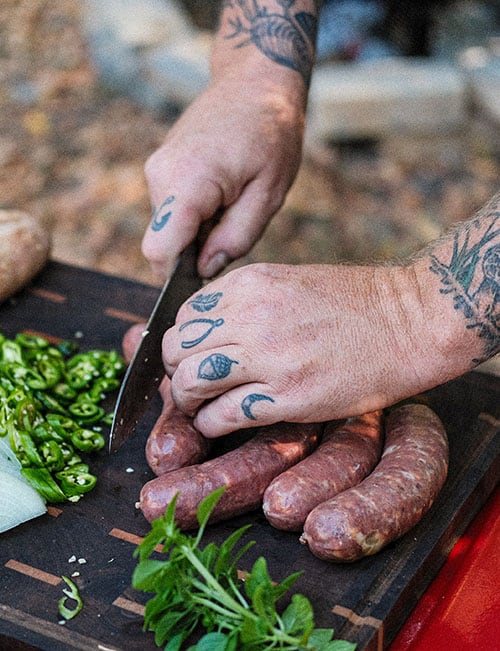
Grind and render the bacon, guanciale or fatty pork. Choose a large, heavy-bottomed pot, as this will really help with the intense browning that’s about to take place. Go with a medium-high heat, taking your time, stirring often. Remove the pork with a slotted spoon and, if needed, add some olive oil, butter or lard to the pot if there’s not enough fat to adequately brown the meats.
Grind and brown the meats. This might take multiple batches, but be diligent and recognize that this step takes a long time. The more deep browning you get, the better this will taste, I promise.
The first phase of the browning will involve a lot of steam as the moisture cooks from the ground meat. The amount of this moisture will depend on the cut, how long it has been frozen and how much you add to the pan. As this moisture evaporates out of the pot, you’ll be left with the meat and the remaining fat. The steam should dissipate and the bubbling sound will be replaced by a harsher sizzle as the fat begins to caramelize and sear the protein. Start stirring at this point, exposing the meat to the bottom of the pot, browning not only the meat, but adding a layer of fond, or browning, to the pot. Scrape the fond as you cook, creating as much of this as you can. This is the core of the flavor.
Grind and sweat the vegetables, herbs and spices in the pot with the fatty pork and assorted meats. Adding the oily leaves of rosemary and sage at this point blooms their flavors into the rendered fats. Similarly, the fennel and anise seeds react with the fat and become fragrant. Cook this until everything is very soft and jammy, and there is yet another layer of delicious crust forming on the bottom of the pot. You can add mushrooms at this point (grind them, too if you want), but my mom is allergic to them and much of this sauce is for my parents, so I’ll omit them. Throw in as much garlic as you want at this point. Once the vegetables are cooked, add the tomato paste to fry it and concentrate the tomato flavor a bit.
Deglaze the pot with some wine. I don’t think it matters if it’s red or white, just decent. I wouldn’t tell on you if you used a little of both if that’s what you’ve got. I inexplicably have two partial bottles of the same exact red wine, so that’s what I’m using. Add the wine and cook it briskly until it’s almost completely reduced.
Now it’s time to add the canned tomato, stock and Parmesan rinds. Bring this to a simmer and cook very, very gently, stirring occasionally for about two hours. Check the ragù now. If the grind feels a little firm or tough, keep cooking it until it is silken and tender. It might take three or four hours. Add the milk and stir well.
Grind and render the bacon, guanciale or fatty pork. Choose a large, heavy-bottomed pot, as this will really help with the intense browning that’s about to take place. Go with a medium-high heat, taking your time, stirring often. Remove the pork with a slotted spoon and, if needed, add some olive oil, butter or lard to the pot if there’s not enough fat to adequately brown the meats.
Grind and brown the meats. This might take multiple batches, but be diligent and recognize that this step takes a long time. The more deep browning you get, the better this will taste, I promise.
The first phase of the browning will involve a lot of steam as the moisture cooks from the ground meat. The amount of this moisture will depend on the cut, how long it has been frozen and how much you add to the pan. As this moisture evaporates out of the pot, you’ll be left with the meat and the remaining fat. The steam should dissipate and the bubbling sound will be replaced by a harsher sizzle as the fat begins to caramelize and sear the protein. Start stirring at this point, exposing the meat to the bottom of the pot, browning not only the meat, but adding a layer of fond, or browning, to the pot. Scrape the fond as you cook, creating as much of this as you can. This is the core of the flavor.
Grind and sweat the vegetables, herbs and spices in the pot with the fatty pork and assorted meats. Adding the oily leaves of rosemary and sage at this point blooms their flavors into the rendered fats. Similarly, the fennel and anise seeds react with the fat and become fragrant. Cook this until everything is very soft and jammy, and there is yet another layer of delicious crust forming on the bottom of the pot. You can add mushrooms at this point (grind them, too if you want), but my mom is allergic to them and much of this sauce is for my parents, so I’ll omit them. Throw in as much garlic as you want at this point. Once the vegetables are cooked, add the tomato paste to fry it and concentrate the tomato flavor a bit.
Deglaze the pot with some wine. I don’t think it matters if it’s red or white, just decent. I wouldn’t tell on you if you used a little of both if that’s what you’ve got. I inexplicably have two partial bottles of the same exact red wine, so that’s what I’m using. Add the wine and cook it briskly until it’s almost completely reduced.
Now it’s time to add the canned tomato, stock and Parmesan rinds. Bring this to a simmer and cook very, very gently, stirring occasionally for about two hours. Check the ragù now. If the grind feels a little firm or tough, keep cooking it until it is silken and tender. It might take three or four hours. Add the milk and stir well.